
RECAP OF Q2, 2026
The second quarter of 2026 reinforced a fundamental shift in the global energy landscape. Geopolitical tensions, energy security concerns, and the accelerating impacts of climate change continue to reshape national priorities. Governments and industry are increasingly recognizing that achieving a resilient, affordable and fossil-free energy system will require both rapid deployment of today's clean technologies and sustained investment in the breakthrough technologies to power future generations.
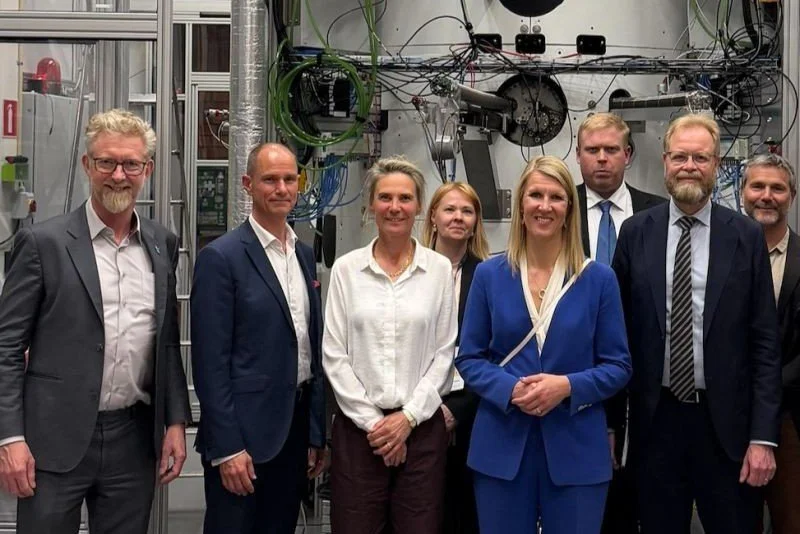
Welcoming Finland’s Minister of Climate and the Environment, Sari Multala, to our lab.
This changing outlook was a defining theme throughout London Climate Action Week, where energy security, electrification, industrial competitiveness and climate resilience dominated discussions. International Energy Agency Executive Director Fatih Birol noted that recent geopolitical instability (Iran in particular) and disruptions to global energy markets are accelerating the global shift towards electrification while reinforcing the importance of resilient, domestically secure energy systems. Across the week, a consistent message emerged: energy security and climate action are no longer separate agendas but increasingly the same challenge.
Within this evolving landscape, fusion energy is gaining increasing recognition as a strategic technology capable of providing abundant, fossil-free power to support future electricity systems. Fusion is no longer simply viewed as a scientific endeavor, but as a long-term industrial capability that can strengthen economic competitiveness, technological leadership, and energy resilience.
Against this backdrop, Novatron Fusion Group (NFG) continued to expand its contribution to the international fusion ecosystem through increased engagement in European policy discussions, strengthened strategic partnerships and continued organizational growth, while advancing the capabilities required to support the commercialization of fusion energy.
Shaping the Future of Fusion in Europe
NFG has actively contributed to this evolving policy landscape through engagement with European institutions, policymakers and industry leaders. During the quarter, the company joined other leading European fusion actors in co-signing an Open Letter to the European Commission, calling for a coordinated European fusion strategy, dedicated investment mechanisms and an enabling regulatory framework capable of accelerating commercial deployment.
NFG also contributed to discussions surrounding the development of Europe's Strategic Research and Innovation Agenda (SRIA), helping inform the technological, financial, and regulatory challenges that must be addressed for Europe to build a competitive fusion industry. These discussions represent an important step towards establishing a coherent European framework that enables public investment, private capital and industrial participation to work together in bringing fusion technologies to market.
Beyond Brussels, NFG maintained an active presence across several of Europe's leading policy and industry forums, including FusionFest in London, Nordic Nuclear Forum in Stockholm, and Sweden's Almedalen Week. These events provided valuable opportunities to engage policymakers, investors, industry leaders and the wider public on fusion's role within Europe's future energy system and the importance of maintaining European leadership in advanced energy technologies.
At Almedalen, discussions increasingly focused on how fusion energy can strengthen Sweden’s long-term energy security, industrial competitiveness and position as a leader in the energy transition. A strong consensus emerged that Sweden and the Nordics have a significant opportunity to establish a leadership position in fusion energy, provided that industry, academia and policymakers act with alignment, urgency and a long-term commitment to enabling commercial deployment.
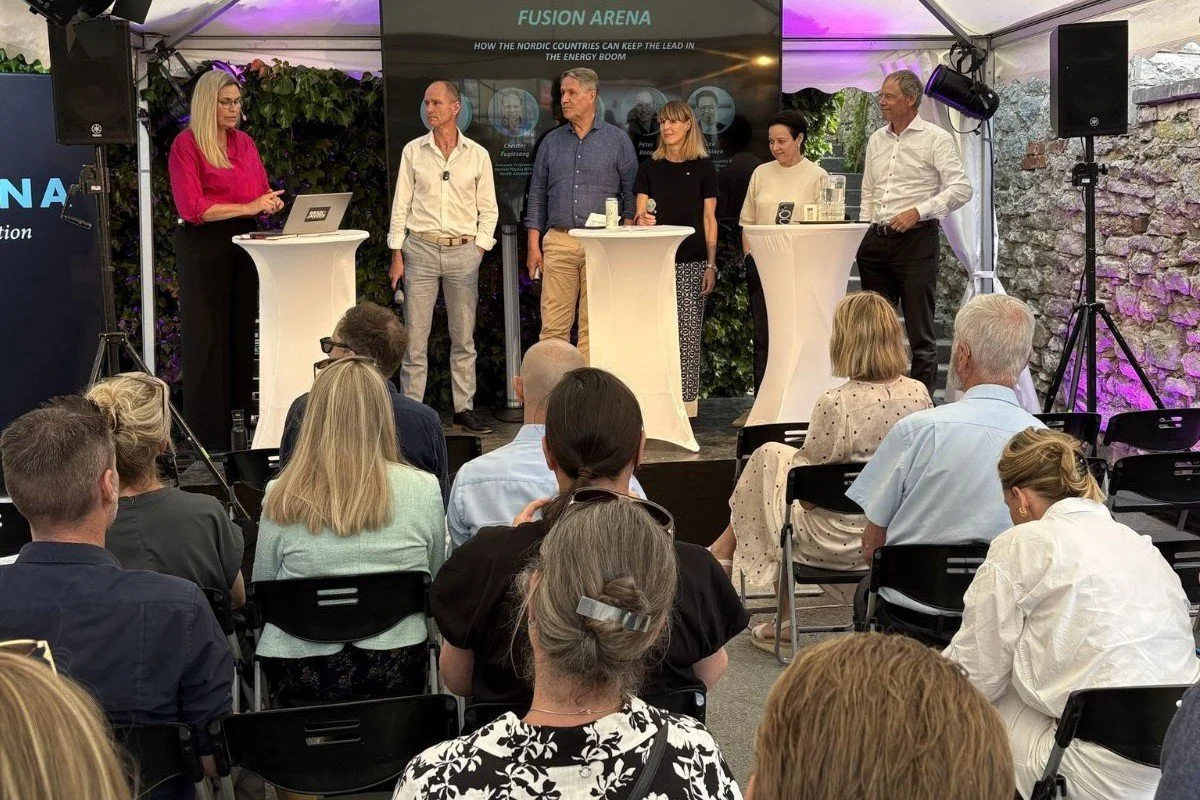
Panel discussion at Fusion Arena in Almedalen.
Developing a Nordic Fusion Ecosystem
While fusion is inherently a global endeavor, strong regional ecosystems will be essential to accelerating commercial deployment. Throughout Q2, NFG continued to strengthen the Nordic fusion ecosystem by bringing together government, industry, academia and research organizations around a shared ambition to position the region as a strong hub for commercializing fusion energy.
One example was the visit by Finland’s Minister of Climate and the Environment, Sari Multala, to NFG’s lab, where discussions focused on the future of fusion and the pivotal role the Nordic countries can play in advancing the technology and strengthening the region’s competitiveness in the emerging global fusion industry.
Another example is NFG’s participation in a high-level discussion with representatives from ministries and government agencies alongside leading industrial companies to explore how Sweden's industrial capabilities can support the emerging fusion sector as it scales. The discussion concluded that industrial players that move now will define Europe’s fusion supply chains for decades.
Company Growth and Momentum
Building the capability to deliver commercial fusion also means investing in people. During the quarter, NFG grew to more than 80 employees while continuing to strengthen expertise across engineering, plasma physics, software development, business development and strategic growth.
The company also expanded its international talent base by welcoming a new employee relocating from the United States, adding valuable expertise and further strengthening the capabilities required to transform breakthrough science into commercially deployable energy technology.
International collaboration remained a key priority throughout the quarter as NFG continued to expand its presence across the European fusion ecosystem. Through new memberships in FUSION NOW, the European Fusion Association and the Royal Swedish Academy of Engineering Sciences (IVA), NFG further strengthened its network of strategic partnerships. These organizations provide important platforms for collaboration across industry, academia, research institutions and public actors, helping to advance the technologies, capabilities and policy frameworks required to accelerate the commercialization of fusion energy.
During the quarter, NFG was awarded the EIC Accelerator, one of Europe's most competitive innovation programs. While the final funding decision is subject to completion of the grant agreement process, the selection itself represents an important validation of NFG’s technology, team, and long-term vision of realizing fusion for the world.
Further recognition came through selection to the Investment Accelerator Programme, an initiative funded by the Swedish Energy Agency and run together with Cleantech Scandinavia. Being chosen as one of only eight companies, based on technological innovation, commercial potential, and relevance to the future energy system, further validates the growing recognition of fusion's role in the global energy transition.
NFG also continued advancing its technology development efforts by having conducted more than 3,000 experiments, generating an expanding body of operational data and technical insights. In parallel, development of the company’s next-generation system, N2, continued throughout the quarter, supported by ongoing concept and design activities.
Further progress was made in advanced simulation capabilities through the development of a toolbox of simulation codes, including the NovaPIC platform. Combined with the increasing application of artificial intelligence to engineering and plasma modelling, these capabilities help improve development efficiency and accelerate learning toward future technical milestones.
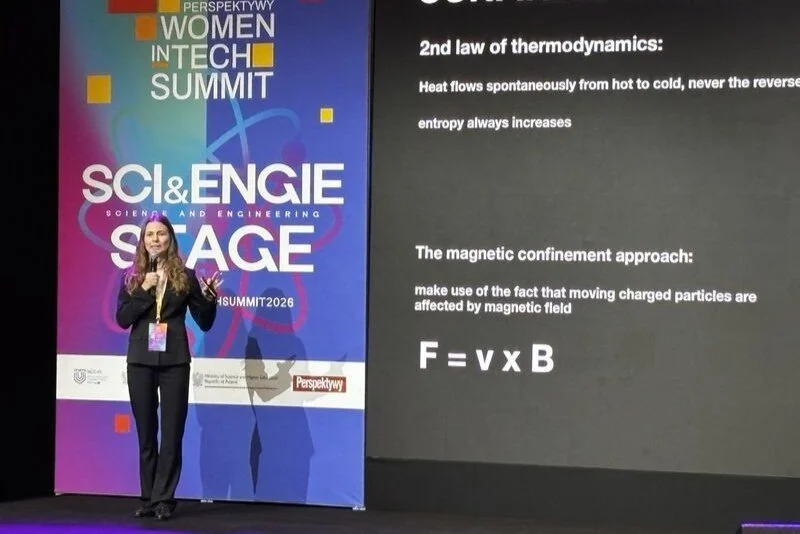
Katarina Bendtz, Senior Physicist, representing NFG at Europe’s largest event for women in tech.
Looking Ahead
Over the coming months, NFG will continue running experimental campaigns through the N1 system while advancing the design, engineering and planning activities for its next-generation test reactor, N2. The company also looks forward to revealing the location of N2 during the fall, marking another significant milestone in its long-term technology roadmap.
Alongside its technology development efforts, NFG will continue strengthening partnerships across Europe while helping to further develop the Nordic fusion ecosystem through closer collaboration with government, industry, academia and research institutions. Preparations are well underway for the next Nordic Fusion Forum, which will take place in Copenhagen on October 19, bringing together policymakers, researchers, investors and industrial leaders to advance cooperation and help shape the region's role within Europe's growing fusion landscape.
As global momentum around fusion energy continues to accelerate, NFG remains committed to ensuring that both the Nordic region and Europe are well positioned to play a leading role in the industrialization and commercialization of fusion energy.