Novatron Fusion Group Ramps Up Global Engagement in Asia and the Americas
Following our recent article, “Europe’s Fusion Revolution: Novatron Fusion Group at the heart of growing continental momentum,” examining Europe’s emerging fusion ecosystem, we now turn attention to our broader global activity.
During the fall, Novatron Fusion Group (NFG) has been actively shaping international dialogue on fusion energy by engaging policymakers, regulators, industry leaders and investors across North America, Asia and the world's leading forum for climate action, COP30 in South America. This article charts how recent public affairs has helped place fusion energy firmly on political and climate agendas worldwide, strengthened cross-border partnerships and supported the transition of fusion from research to implementation.
Fusion in the U.S. - Welcoming congressional advisors to Sweden
In the U.S., fusion momentum is unmistakable. The U.S. Department of Energy’s Milestone-Based Fusion Development Program is enabling private firms to develop prototype fusion plants, bridging the gap between experiments and market-ready technology. At the same time, the U.S. policy architecture has created a clear roadmap, underpinned by record levels of bipartisan support and more than $1 billion in new private capital in recent years.
Two very recent DOE milestones further underscore the accelerating pace of U.S. fusion. First, the Department has created a dedicated Office of Fusion, elevating fusion to a national priority and providing enhanced focus on commercialisation, public-private collaboration, supply-chain growth and regulatory development. Second, the DOE has launched a Fusion Science & Technology Roadmap, a coordinated Build–Innovate–Grow strategy outlining critical research, infrastructure and partnership priorities to accelerate fusion from lab research to commercial deployment, with the aim of scalable power by the mid-2030s.
Another recent indicator of U.S. momentum came when Energy Secretary Chris Wright told the BBC that fusion “will soon power the world,” projecting commercial electricity from fusion could reach the grid in eight to fifteen years, while advances in AI, national laboratories and private firms may deliver early solutions within five years.
During this period, NFG has engaged with stakeholders to strengthen transatlantic dialogue on fusion policy, deployment and industrialisation. This included welcoming U.S. congressional advisors to Sweden for site visits and discussions, building on earlier meetings during Fusion Energy Week 2024, and engaging directly with the bipartisan House and Senate Fusion Energy Caucuses to help lay the policy foundations for international deployment. In parallel, NFG continues discussions with authorities in several U.S. states to e.g. identify local partnerships and regulatory alignment that could support future deployment.

Fusion in Asia - Joining global delegations in Chengdu, China
Across Asia, the pace is equally striking. China’s EAST facility has set new plasma-duration records, while Korea’s KSTAR continues to demonstrate high-performance steady-state operation. In Japan, newly appointed Prime Minister Sanae Takaichi has declared that her government will “strive for the early practical adoption in society of next-generation advanced reactors and fusion energy.” This places fusion at the centre of an ambitious plan for national energy self-sufficiency and continues Japan’s long-standing strategy to industrialise fusion technology, with the goal of demonstrating power generation in the 2030s.
Together, these regional developments reinforce the conclusion of our Europe-focused article: fusion energy is no longer a niche scientific ambition confined to laboratories. It is entering a phase of industrial readiness, global policy alignment and cross-border strategic investment.
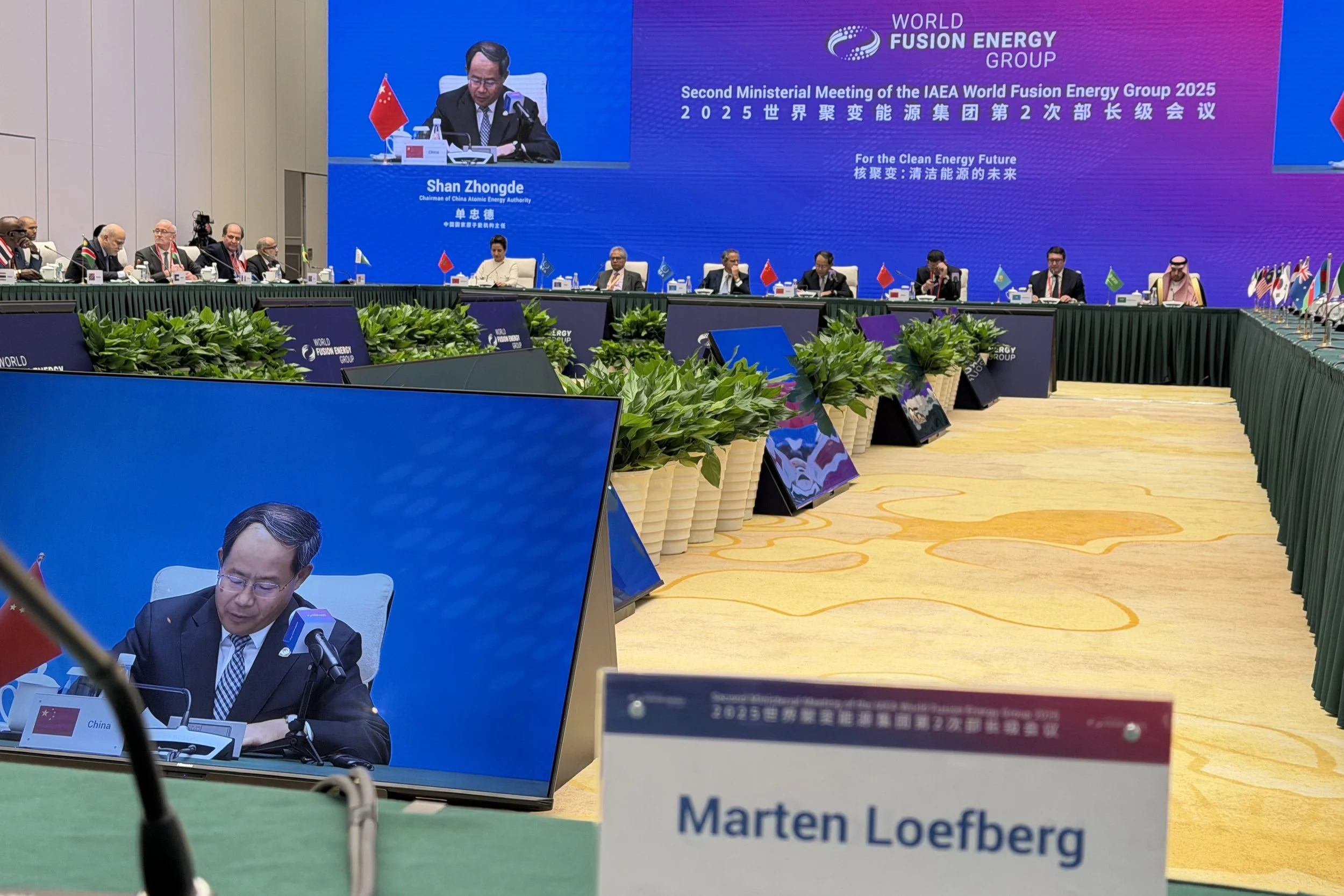
This momentum was reflected in NFG’s participation in the Second Ministerial Meeting of the IAEA World Fusion Energy Group (WFEG) in Chengdu, China, in October.
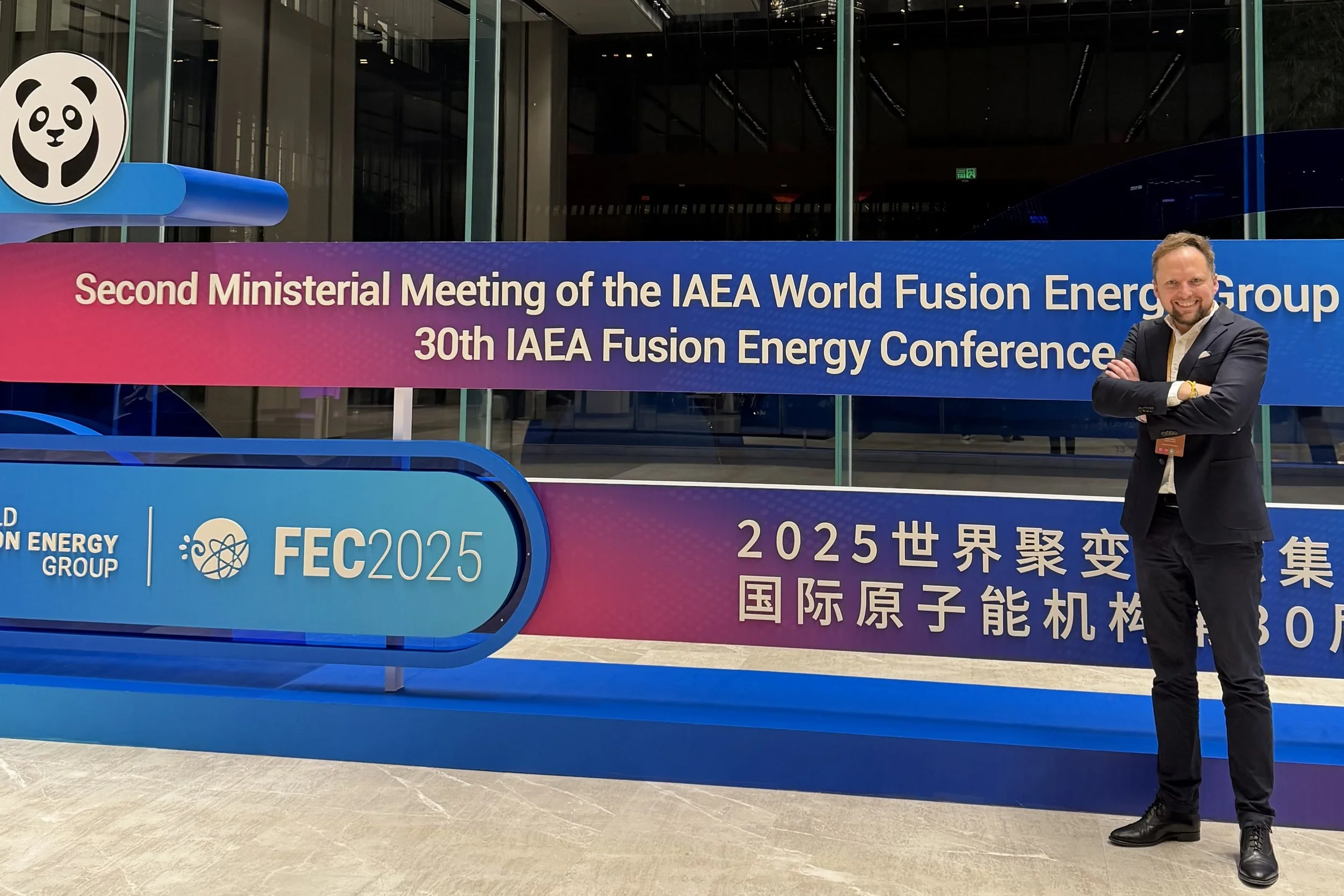
Mårten Löfberg, Director for Government and International Affairs at Novatron Fusion Group
At the WFEG Ministerial Meeting, which brought together ministers and senior representatives from more than 30 nations, NFG contributed to high-level discussions on how public-private collaboration can accelerate the global rollout of fusion energy. NFG also engaged bilaterally with ministers and senior officials from Europe, Asia and North America, sharing expertise on confinement technology and pathways to commercial deployment. This was followed by a historic declaration from IAEA Director General Rafael Mariano Grossi, who stated that “fusion energy now is entering the implementation phase” – a significant signal that the global community sees fusion as ready for real-world deployment.
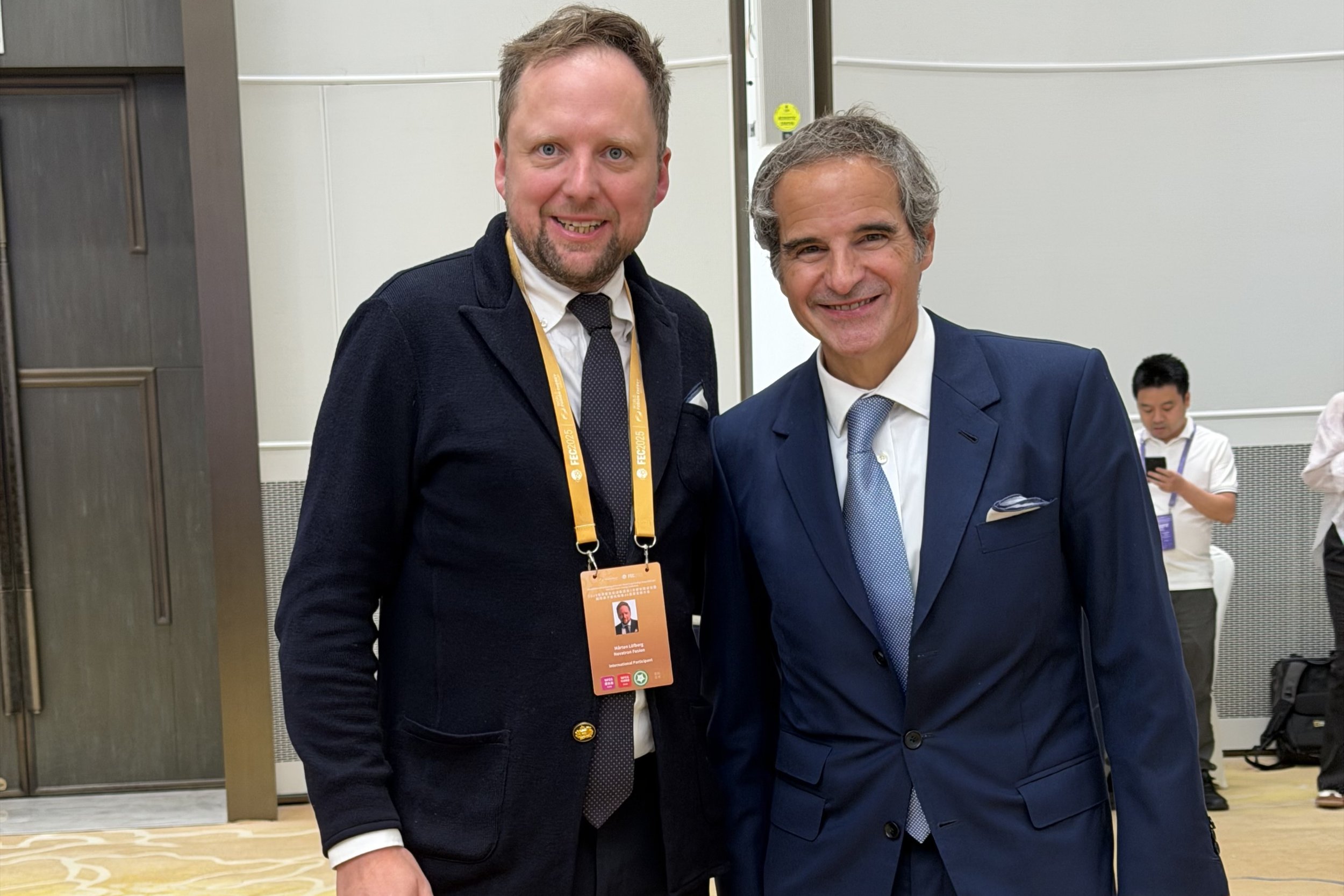
Mårten Löfberg, NFG Director for Government and International Affairs, and Rafael Mariano Grossi, IAEA Director General
Fusion Energy at COP30: Turning Vision into Action
Recent global affairs activity culminated at COP30 in Belém, Brazil, where NFG, in cooperation with St1, helped bring fusion energy into the spotlight as a viable climate solution, particularly in a year when the United States, previously a strong driver of fusion visibility at COP, was absent. Organized in collaboration with St1, a seminar focused on “Is Fusion the Game-Changer We’ve Been Waiting For?”, bringing together policymakers, investors and civil-society representatives to explore how fusion can move from research to deployment quickly enough to support global climate goals.
NFG and St1 also co-hosted the COP30 Fusion Energy Mingle, with opening remarks by Sakari Puisto, Finland’s Minister of Economic Affairs, and Mattias Frumerie, Sweden’s Climate Ambassador. Minister Puisto highlighted the opportunity for Nordic collaboration around fusion, pointing to the region’s shared industrial strengths and clean-energy leadership.
Throughout COP30, NFG met with a broad range of international stakeholders, from the IAEA, ITER, and the Fusion Industry Association to NGOs, energy companies, supply‑chain actors, and investors, while also discussing with EU Energy Commissioner Dan Jørgensen how to deepen collaboration between EU institutions and European private fusion companies.
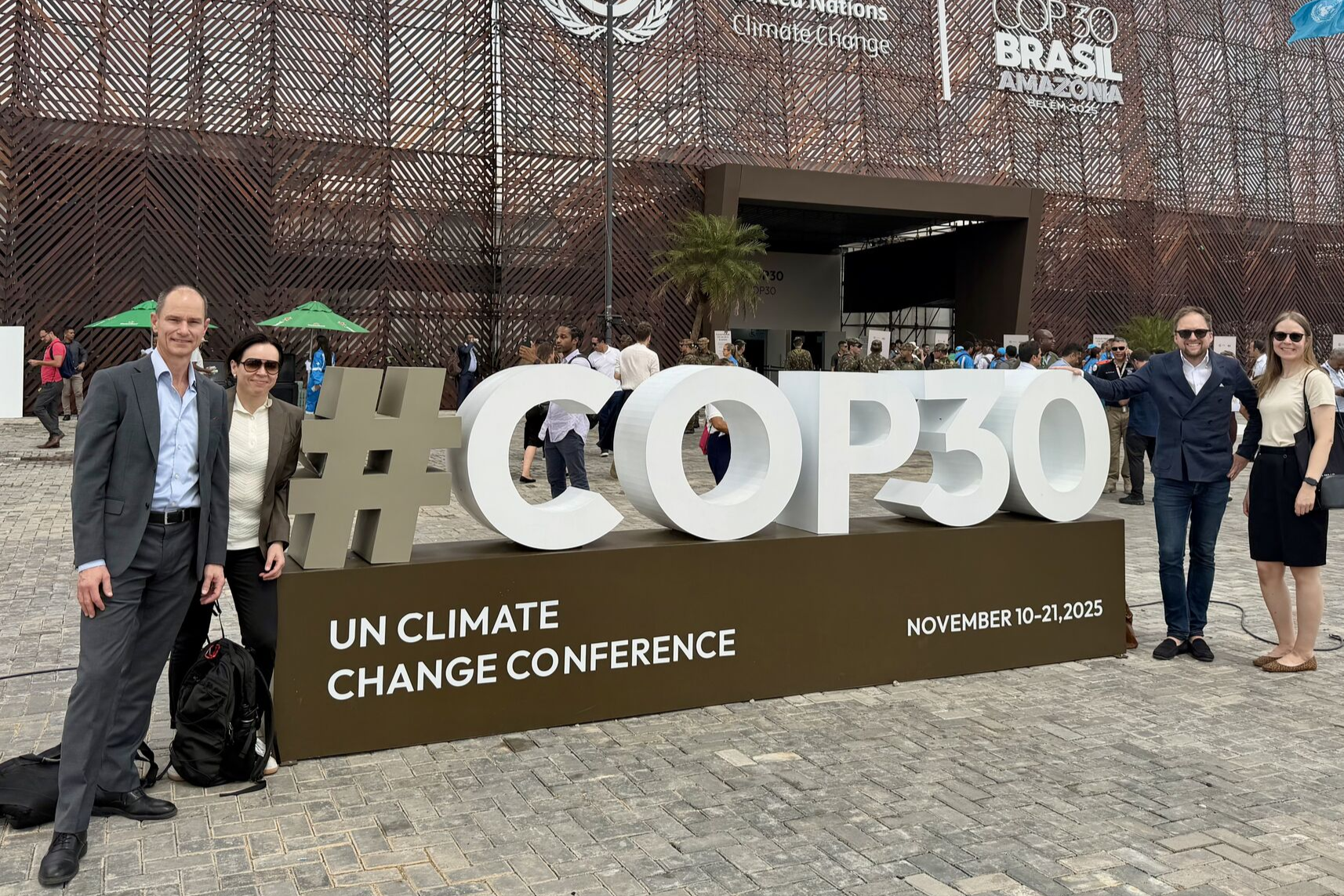
Peter Roos (CEO of NFG), Lea Rankinen (Head of Sustainability and Corporate Affairs at St1), Mårten Löfberg (NFG Director for Government and International Affairs) and Sanna Jokila (Public Affairs Lead at St1)
A Moment of Opportunity
From the IAEA’s milestone meetings in Chengdu to the global climate stage at COP30, the trajectory of fusion energy is increasingly clear. The declaration that fusion is entering its implementation phase, combined with strong policy support across the U.S., Japan and Europe, marks a new chapter in clean-energy development.
For NFG, this period represents a defining moment. By advancing a practical, scalable fusion solution and actively engaging with international partners, we remain firmly committed to our mission to transform fusion from scientific vision into societal reality, in turn accelerating the global transition toward clean, secure and abundant energy.