
Recap of Q1, 2026
The opening months of 2026 have underscored the growing urgency of the global energy transition. In recent days, the World Meteorological Organization released its latest State of the Global Climate report, warning that the Earth’s climate system is now more out of balance than at any point in recorded history. This assessment reflects the continued rise in greenhouse gas concentrations and the growing accumulation of heat within the planet’s systems, with wide-ranging implications for environmental stability and economic resilience.
In response, the Secretary-General of the United Nations António Guterres issued a renewed call for governments to accelerate the transition away from fossil fuels. He emphasized that such a shift is essential not only to address climate change, but also to “deliver climate security, energy security and national security,” underscoring the increasingly interconnected nature of global energy policy and geopolitical stability.
Within this context, fusion energy is emerging as a critical component of the long-term solution. As the demand for clean, reliable, and scalable energy continues to grow, the transition from scientific advancement to industrial deployment is gaining momentum. For Novatron Fusion Group (NFG), Q1 has been shaped by this broader urgency, reflected in its expanding global engagement, strategic partnerships and continued progress toward enabling fusion as a viable energy source for the future.
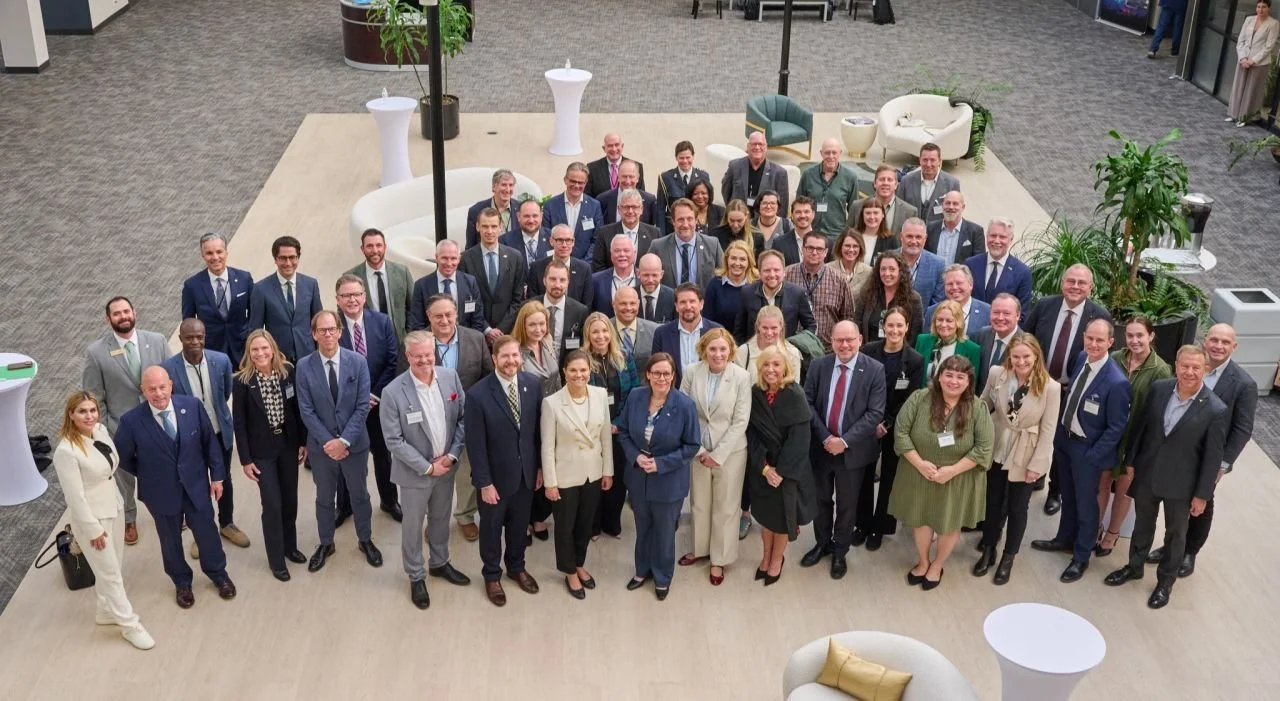
Team Sweden’s high-level delegation to Texas (more info about the event is provided further down in the article).
Photo: Business Sweden
Events: Strengthening global dialogue and industry alignment
January: Fusion on the global stage in Davos
The year began with NFG’s participation at the World Economic Forum in Davos, where global leaders across policy, industry and science convened to address the world’s most pressing challenges. Fusion energy featured prominently in discussions around climate change, energy security and the exponential growth in global energy demand driven by AI and electrification. NFG’s CEO Peter Roos contributed to two key sessions focused on the path to commercialization. These discussions explored both the technical challenges of achieving stable plasma confinement and the broader ecosystem required to bring fusion energy to market. A central theme emerging from Davos was the urgency of transitioning fusion from laboratory breakthroughs to scalable, real-world energy systems. Discussions emphasized that commercialization is no longer a distant ambition, but an active industrial challenge requiring coordinated action across governments, private companies and research institutions.
Equally important was the global perspective. As Roos highlighted during the forum, fusion’s economic and societal benefits must be accessible worldwide. Ensuring equitable deployment will be critical to positioning fusion not only as a technological milestone, but as a truly transformative global energy solution.
January: European policy momentum in Brussels
Shortly after Davos, NFG participated in a high-level hearing at the European Parliament titled “Fusion Energy in Europe: Call for Action.” This event came at a pivotal moment, as the European Commission advances its first-ever EU Fusion Strategy. The hearing brought together policymakers, industry leaders and researchers to discuss how Europe can translate growing political momentum into industrial capability. Contributions from senior European officials underscored the strategic importance of fusion for long-term energy security and economic resilience. For NFG, involvement in this forum reinforced our position as a leading private-sector voice in European fusion. As the first private fusion initiative in the EU to build a fully integrated plasma system, our company provided practical insight into the transition from experimental research to industrial deployment.
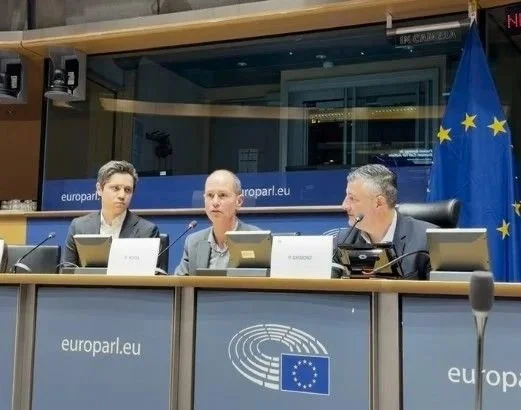
NFG CEO Peter Roos in the European Parliament.
February: FusionX Global in Munich
During February 25–27, NFG took part in FusionX:Global in Munich, one of the most important gatherings of the international fusion community. As both sponsor and active participant, the company played a visible role in discussions focused on commercialization pathways and ecosystem development. NFG contributed to two panel discussions addressing complementary aspects of the fusion landscape. The first panel, featuring CEO Peter Roos, explored the emergence of a Nordic fusion ecosystem. The discussion examined how the region’s industrial base, stable energy infrastructure and tradition of innovation position it as a strong candidate for early fusion deployment. The second panel, led by Founder and Chairman Erik Odén, focused on the commercial outlook for magnetic mirror technology. While tokamaks have historically dominated fusion research, interest in alternative confinement concepts is growing rapidly. The discussion addressed the potential for mirror systems to serve as neutron sources and highlighted their inherent advantages such as lower complexity, which results in lower costs, supporting their scalability as future power systems. The NOVATRON concept – a novel axisymmetric magnetic mirror configuration – continues to attract global attention as a promising alternative within the broader fusion landscape.
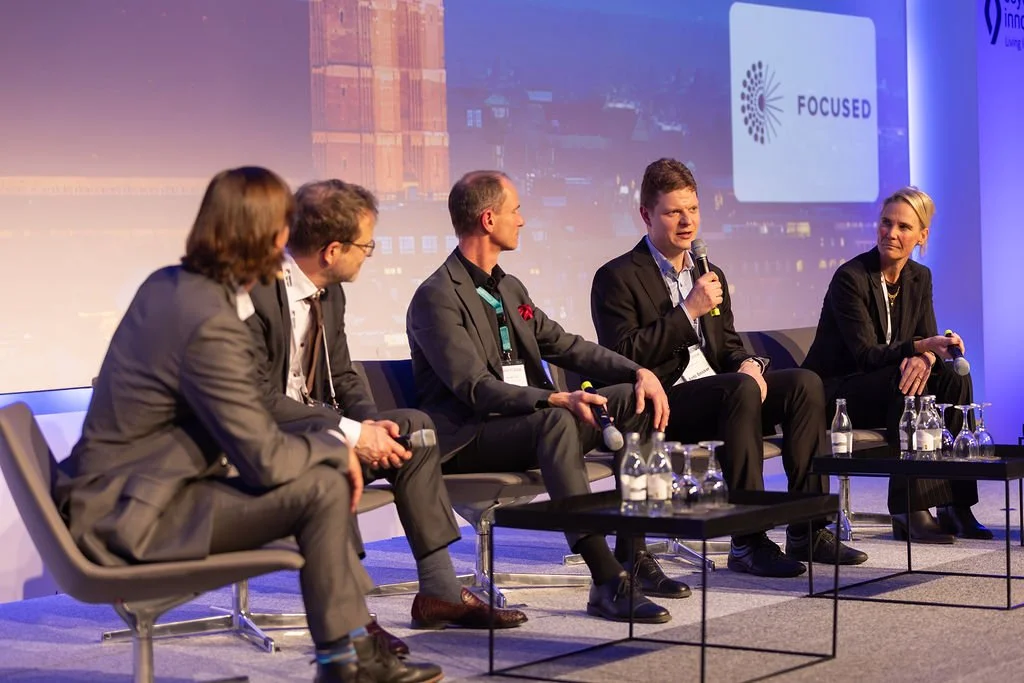
NFG CEO Peter Roos in a panel during FusionX Global. Photo: Corinna Lehmeyer, Bayern Innovation
March: International collaboration at ITER
In March, NFG, together with its strategic partner St1, visited the ITER Organization following an invitation from Director-General Pietro Barabaschi. ITER represents one of the most ambitious international scientific collaborations in history, and the visit provided a valuable opportunity for dialogue and knowledge exchange. The discussions centered on how public and private actors can support one another in accelerating fusion development. As the field transitions from research toward industrialization, collaboration across disciplines, technologies, and borders is increasingly critical. For NFG, the visit underscored the importance of aligning with global efforts while contributing its own innovations. Engagement with ITER and similar initiatives strengthens the broader fusion ecosystem and helps ensure that advancements in one area can benefit the field as a whole.
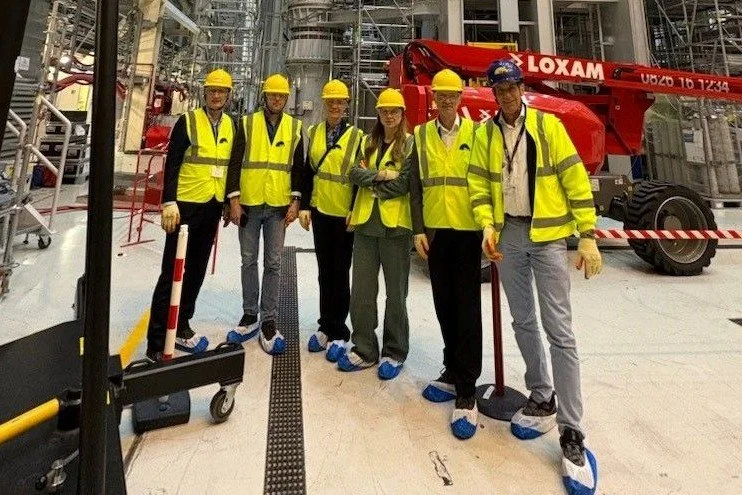
Representatives from NFG and St1, together with ITER Director-General Pietro Barabaschi.
March: Expanding transatlantic ties in Texas
A few weeks ago, NFG joined a high-level Swedish business delegation to Texas, organized by Business Sweden and led by Crown Princess Victoria and Sweden’s Minister for Foreign Affairs. The delegation brought together leading representatives from Sweden’s innovation ecosystem, spanning sectors including advanced technology, life sciences, and space. The visit highlighted Texas’ growing role as a global hub for innovation and industrial development, as well as its position as one of the world’s largest economies. For NFG, the trip provided an opportunity to build connections beyond Europe and engage with potential partners in the United States. Discussions focused on collaboration opportunities, investment and the broader role of fusion in future energy systems. The experience reinforced the importance of international partnerships in scaling fusion technology and demonstrated how national innovation ecosystems can complement one another in driving progress.

Crown Princess Victoria and NFG Director for Government and International Affairs Mårten Löfberg.
Partnerships: Building the Nordic fusion ecosystem
Collaboration and partnerships remain at the core of NFG’s strategy. During Q1 2026, the company announced two significant partnerships to further strengthen the approach of building a Nordic fusion ecosystem.
Studsvik: Integrating infrastructure and expertise
NFG signed a Memorandum of Understanding with Studsvik, a global nuclear technology company. This partnership brings together complementary strengths. Studsvik contributes unique site infrastructure and decades of expertise in nuclear technology integration, while NFG provides its proprietary fusion technology and capabilities. The collaboration aims to accelerate the deployment of commercial fusion power by leveraging shared resources and knowledge. By working together, the companies aim to improve performance, reduce costs and create a more efficient pathway to commercialization.
Freemelt: Advancing manufacturing innovation
In parallel, NFG entered into a partnership with Freemelt, a developer of advanced metal 3D printing technologies. This collaboration focuses on exploring new manufacturing techniques for fusion reactor components, particularly those involving high-performance materials such as tungsten. Additive manufacturing has the potential to play a critical role in fusion development, enabling the production of complex geometries and components that are difficult or impossible to achieve using traditional methods. Freemelt’s expertise in this area opens new possibilities for reactor design and scalability. The partnership reflects a shared commitment to innovation and highlights the importance of advanced manufacturing in bringing fusion systems to market.
Looking ahead
The first quarter of 2026 has demonstrated that fusion energy is no longer a question of if, but rather when it will be realized. What was once a primarily research-driven field is rapidly evolving into an industrial endeavor requiring coordinated action across technology development, policy and global collaboration. For NFG, this quarter has been defined by active participation in shaping that transition. From international forums and policy discussions to strategic partnerships and technical advancement, NFG continues to build momentum toward its goal of commercial fusion energy.
And as always, behind every technological breakthrough stands a team of skilled and dedicated individuals. During the first quarter of 2026, NFG continued to invest in its team, strengthening key research and development capabilities. Through the attraction of leading expertise in areas such as plasma diagnostics and computational physics from around the world, NFG has expanded its ability to generate deeper insights and perform more advanced analysis across its projects. By prioritizing talent and capability building, NFG strengthens its innovation capacity through a diverse team with a broad range of perspectives and expertise. This diversity helps the company remain at the forefront of technological development while building a strong internal foundation for long‑term success.
With a strong foundation of partnerships, a growing team and increasing engagement across the global fusion ecosystem, NFG is well positioned to help drive one of the most transformative energy transitions of our time.